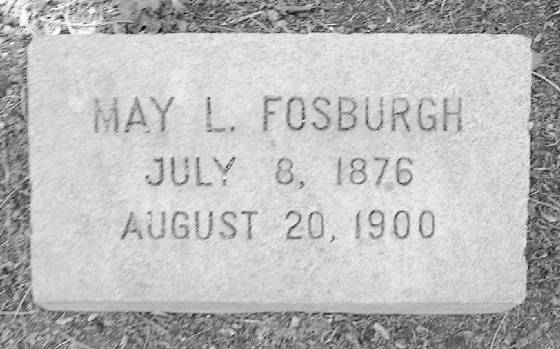
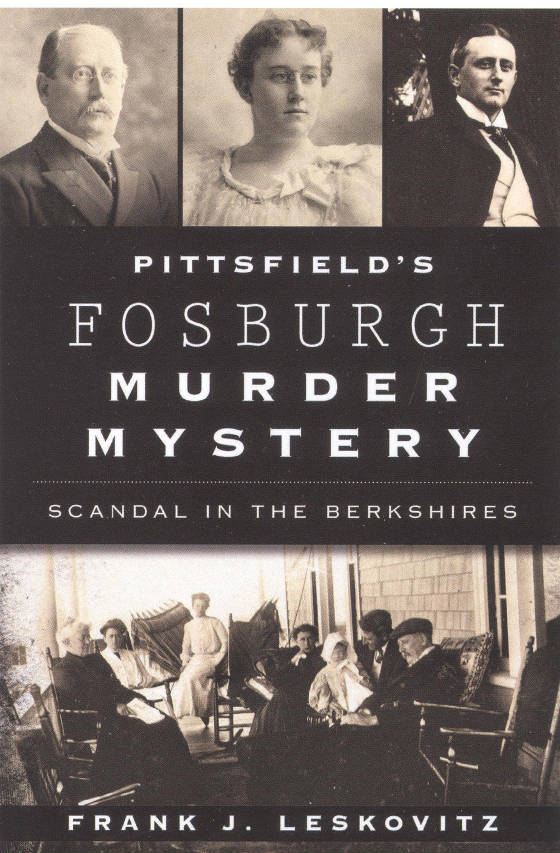
May L. Fosburgh was the victim of one of Pittsfield, Massachusetts'
most notorious unsolved murders. In the early morning hours of August 20, 1900, shots rang out at the Fosburgh family
home at the corner of Tyler Street and Woodlawn Avenue. Shortly thereafter, twenty-four year old May Fosburgh was found
dead with bullet wound to the heart.
The family had arrived in Pittsfield just
a few months prior to the murder. The R. L. Fosburgh & Son Construction Company was in charge of constructing new
buildings in Pittsfield for the rapidly expanding Stanley Electric Company, which later became part of the General Electric
Company. The Fosburghs' claim that three masked men had broken into the house and shot May led to the largest manhunt in city
history. Despite all exits to the city being well covered, the three mysterious burglars were never found.
The family's story regarding the incident had several troubling inconsistencies which alerted prosecutors.
A few weeks after May's death, her
brother Robert S. Fosburgh, Jr. was indicted for manslaughter. The trial received national attention and a circus-like
atmosphere prevailed. Locally, the feeling was that the Fosburghs were covering up the true details to avoid a scandal.
The prosecution painted the picture of a fierce fight between father and son. As May Fosburgh attempted
to intervene, she was fatally shot.
The Fosburgh trial featured the
early use of forensic science. Ballistic and powder burn testing was conducted and presented into evidence. Testing
was conducted by Dr. Franklin Kittredge Paddock, Medical Examiner of Berkshire County, Dr. Frank W. Draper, Medical Examiner
of Suffolk County, and Gen. Jephanus A. Whitney of the Massachusetts State Police. Also testifying was Col. Charles
A. R. Dimon, the mayor of Lowell, Massachusetts and manager of the United States Cartridge Company. The witnesses testified
that May Fosburgh was shot from just inches away, and not several feet away as maintained by the family.
After several days of riveting
testimony, Judge William B. Stevens ended the trial, instructing the jury to acquit Robert L. Fosburgh, Jr. It
appears in this case that wealth and social prominence outweighed true justice. So ended the most sensational murder trial
in Berkshire County history. Soon after, the family left Pittsfield, never to return.
May Fosburgh is buried at Woodlawn
Cemetery in Bronx, New York alongside the graves of her father, Robert Lloyd Fosburgh, and her mother, Esther Mair Stuart
Fosburgh.